Walk-In Showers for Seniors: Safe, Stylish Aging-in-Place Bathrooms
If you are helping a parent stay safely in the home they love, the bathroom is the most important room to get right. The bathtub, in particular, is one of the most common places for a fall, and stepping over a high tub wall becomes harder and riskier over time. A well-designed walk-in shower for seniors removes that danger while keeping the bathroom comfortable, dignified, and genuinely beautiful. This guide walks families through what makes a shower safe for aging in place, how it compares to a walk-in tub, what financial help may be available, and how to keep the whole thing looking like a home rather than a hospital.
Why a walk-in shower is the safer choice
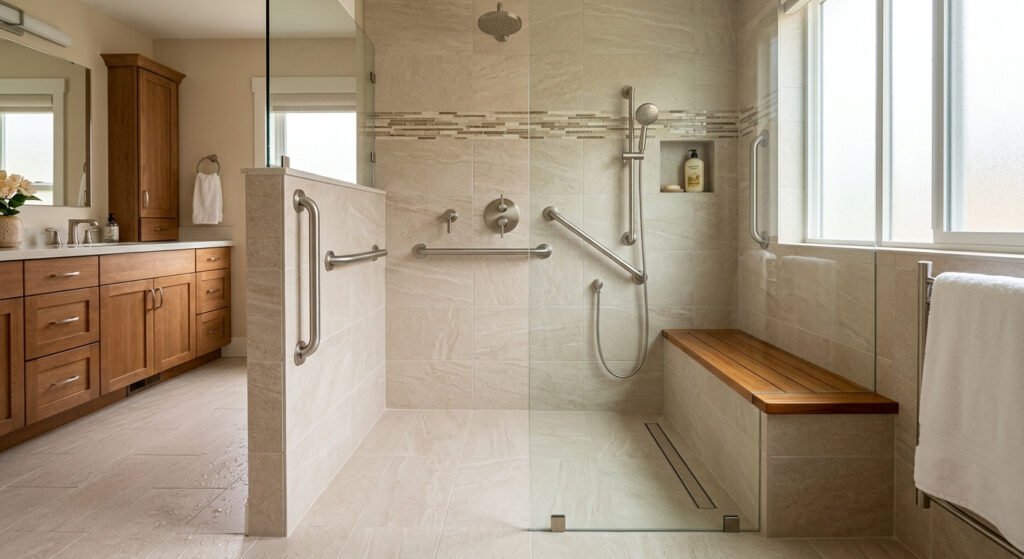
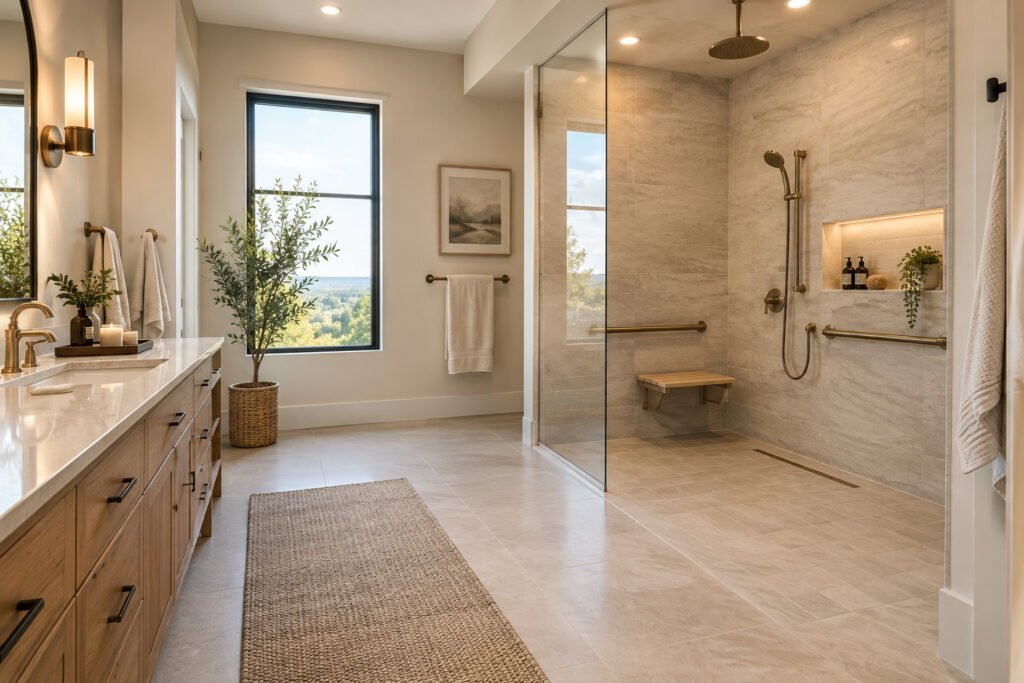
The raised curb on a traditional shower and the high wall of a bathtub are two of the biggest fall risks in any bathroom. A walk-in shower with a curbless or very low entry removes that barrier entirely, so there is nothing to step over and lift a leg across. Paired with the right safety features, a walk-in shower lets an older adult bathe independently and with confidence, which is often the difference between staying at home and needing to move. It is one of the most meaningful upgrades a family can make for a loved one who wants to age in place.
Key safety features of a senior-friendly walk-in shower
A shower is only as safe as its design. These are the features that matter most:
A curbless or low-threshold entry. A zero-threshold entry is ideal because there is nothing to trip on and a walker or wheelchair can roll straight in. Where a fully curbless entry is not possible, a low, beveled threshold keeps access easy. The floor is sloped correctly toward the drain so water stays in the shower.
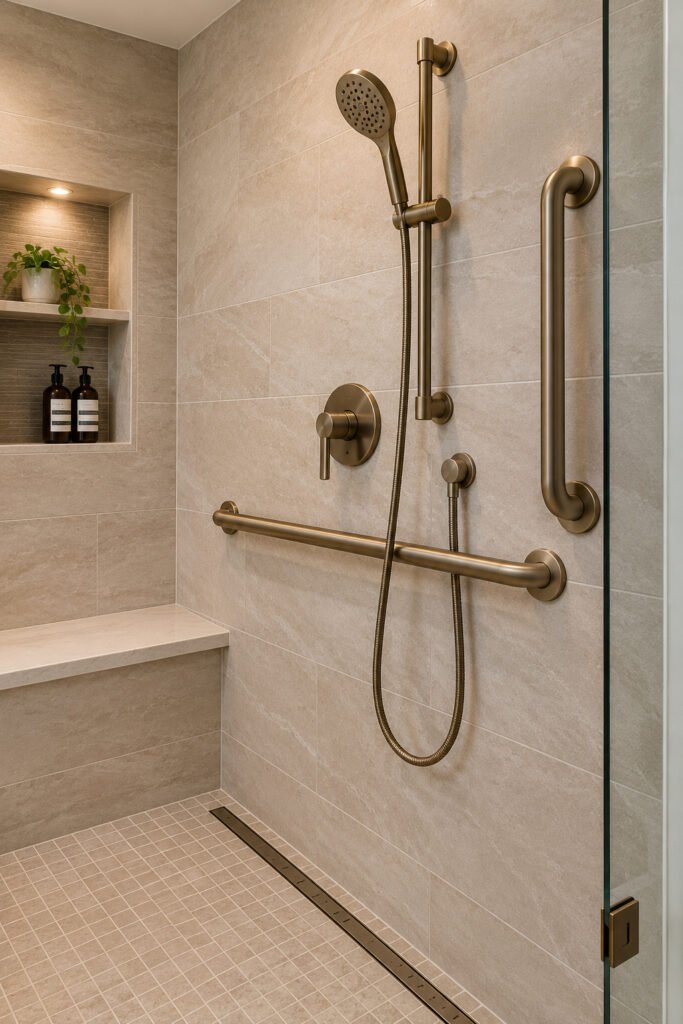
Grab bars, anchored the right way. Sturdy grab bars are the single most important safety feature. They are typically mounted 33 to 36 inches above the floor, and the critical detail is what is behind the wall: a grab bar must be anchored into solid wood blocking or a steel backing plate so it can safely hold about 250 pounds. A bar screwed only into drywall can pull loose under real weight, which is dangerous. We build proper blocking into the walls during the remodel so every bar is rock-solid.
A built-in bench or seat. A tiled bench or a fold-down seat lets someone bathe seated, which is safer and far more comfortable for many older adults.
A handheld showerhead. A handheld sprayer on a slide bar can be used seated or standing and put exactly where it is needed, with the controls placed within easy reach from the seat and the entry.
Slip-resistant flooring. Textured, slip-resistant tile provides the traction a senior shower needs without looking clinical.
Good lighting and a wider entry. Bright, even lighting removes shadows, and a wider opening supports a walker or wheelchair. Together these small choices make daily use safer and easier.
These same features are the foundation of any curbless, barrier-free shower and any ADA roll-in remodel, scaled to the specific needs of the person using it.
Walk-in shower vs. walk-in tub for seniors
Families researching aging-in-place options often compare walk-in showers with walk-in tubs, so here is an honest look at both.
A walk-in tub has a watertight door and a built-in seat, so you enter through the side and sit while the tub fills and drains around you. Its main appeal is a deep, seated soak, which some people find soothing for sore joints. The trade-offs are real, though: you have to sit in the tub while it slowly fills and drains, which can feel cold and takes time, and there is still a threshold to step over to get through the door.
A walk-in shower with a curbless entry and a bench offers the easiest, most immediate access, a lower typical cost, and the most flexibility for a walker or wheelchair. For most seniors focused on safety and everyday independence, accessibility specialists generally point to a curbless walk-in shower as the more practical choice. A walk-in tub can be a good fit for someone who specifically wants to soak and can manage the door threshold.
Bath By Design SA specializes in custom walk-in and curbless showers built around each person’s needs. If your heart is set on a walk-in tub, we are happy to talk through whether a shower would serve you better and help you make the right call for your family.
Is a walk-in shower for seniors ever free? Financial assistance options
You may have seen ads promising a “free” walk-in shower or tub for seniors. Here is the honest answer: these projects are generally not free, and any ad promising a completely free shower with no income check, no medical need, and no application is a red flag worth avoiding. That said, real financial assistance does exist for families who qualify, and it can significantly reduce the cost. The main avenues in 2026 include:
- Medicaid Home and Community-Based Services (HCBS) waivers. These vary by state and can cover accessible bathroom modifications when they are medically necessary. In Texas, the STAR+PLUS HCBS waiver includes a Minor Home Modifications benefit that can help cover items like grab bars and accessible bathroom changes. Eligibility is based on financial and functional need, the work is coordinated through a managed-care plan, and spots can be limited, so it is worth applying early.
- VA benefits for veterans. The VA’s Home Improvements and Structural Alterations (HISA) grant helps veterans fund walk-in and roll-in showers, tub-to-shower conversions, grab bars, and wider doorways when a VA provider documents the work as medically necessary. Additional housing grants may also apply.
- USDA Section 504 grants. For low-income homeowners age 62 and older in rural areas, this program offers grants (up to a set limit) for safety-related home repairs, including bathroom modifications.
- Nonprofits. Organizations such as Habitat for Humanity’s aging-in-place programs and Rebuilding Together help eligible senior homeowners with accessibility renovations at little or no cost.
- HSA and FSA funds. If a healthcare provider recommends the modification, tax-advantaged health accounts can sometimes be used toward the cost.
A few practical tips: Original Medicare generally does not cover these projects because it treats them as home improvements rather than medical equipment, though some Medicare Advantage plans now include limited bathroom-safety benefits, so it is worth checking the plan’s coverage. Ask your contractor for an itemized estimate that separates safety items like grab bars and non-slip flooring, since many programs require that. And do not start the work before a program approves it, or you may lose reimbursement.
This is general information, not financial or legal advice. Program names, funding, and eligibility change, so confirm current details directly with the agency or your plan. We are happy to provide the itemized estimates these programs typically require.
Safe does not have to mean institutional
The best aging-in-place bathrooms do not look like a hospital. A curbless walk-in shower with large-format tile, a custom tiled bench, elegant grab bars that double as towel bars, warm lighting, and quality fixtures looks like a high-end spa while quietly doing its job. Dignity matters, and a beautiful bathroom helps a loved one feel at home rather than in a care facility. That balance of safety and style is exactly our approach see our luxury accessibility page for finished examples.
Aging in place in San Antonio
More San Antonio families are choosing to help their parents stay in the homes they love, and a safe, beautiful bathroom is the heart of that decision. We design and build aging-in-place bathrooms across San Antonio and the surrounding suburbs, and every project begins by understanding the specific needs, abilities, and preferences of the person who will use it. The goal is always the same: safety and independence, without giving up comfort or style.